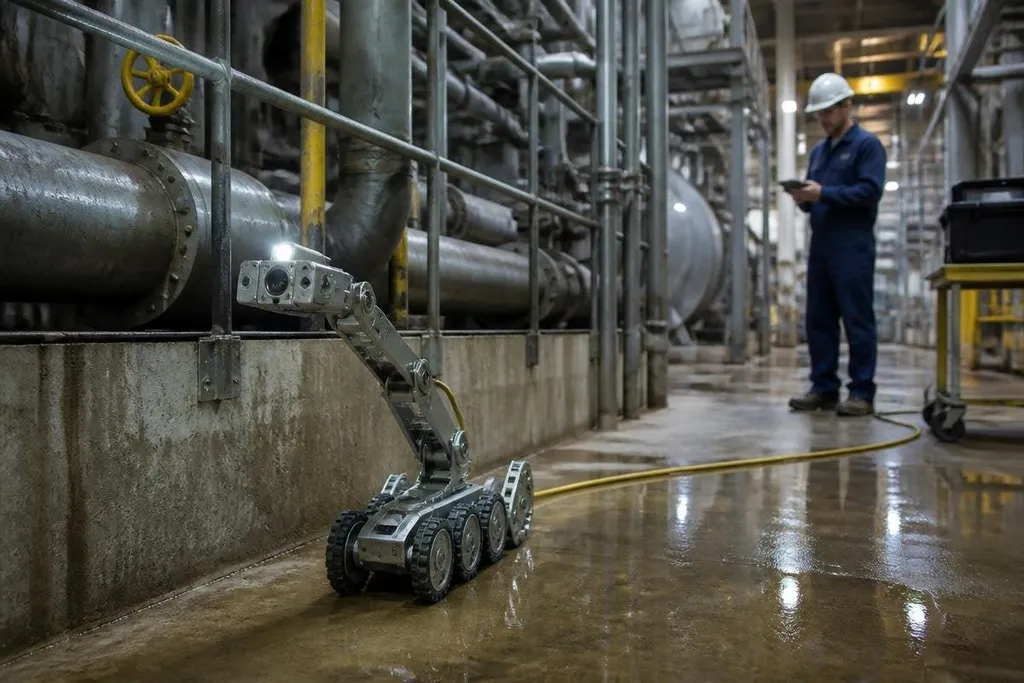
Nuclear robots work where radiation, contaminated water, heat, or unstable structures make human access costly and risky. The business opportunity starts with a narrow task: inspect, measure, move, or map something without sending a person into the area.
- Radiation-hardened cameras can inspect rooms, pipes, tanks, and equipment.
- Teleoperated arms can handle tools or waste containers from a protected position.
- Mapping robots can record dose levels and physical damage for later work.
Inspection is the first market
Inspection gives a robot a clear job and a clear buyer. A plant operator needs condition data on pipes, valves, cooling equipment, storage areas, and reactor structures. A decommissioning contractor needs records that show where contamination and damaged material are located.
A tracked robot with cameras can enter a space, stream video, and record its route. An underwater robot can inspect submerged structures where water blocks direct access. A small arm can place a sensor against a surface or turn a valve from outside the room.
The sale is the work package around the robot. It can include the robot, radiation testing, remote control, data storage, operator training, repairs, and a report that fits the site's safety process.
A machine that collects useful evidence is easier to buy than a general robot with no assigned task.
Nuclear robot contracts depend on work that can be repeated, measured, and priced. A report from Robot 24 can tie a machine to its task, test site, date, and result, giving a buyer facts to weigh before a decommissioning job runs for years.
Decommissioning creates longer jobs
Decommissioning sites need repeated work over long periods. Buildings must be surveyed, equipment must be checked, and material must be sorted before workers can remove it. Conditions can change as structures open and contamination moves.
Robots can support this work with radiation sensors, cameras, LiDAR, and manipulator arms. LiDAR measures distance with laser pulses, helping a team build a map of rooms, pipes, obstacles, and waste containers. That map can guide later robot runs and help people plan tools before entering a work area.
The business model may be a service rather than a sale. A specialist company can bring the robot, operators, spare parts, and data team to each site. This suits customers that need nuclear work only during outages or cleanup projects and don't want to keep a full robot team on staff.
Waste handling needs careful design
Moving radioactive material is a hard physical task with strict controls. Robots may carry containers, sort objects, wipe surfaces, or place tools in a hot cell. A hot cell is a shielded room used for work with highly radioactive material.
The machine must keep working after exposure to radiation, dust, heat, and repeated cleaning. Its cables, seals, cameras, batteries, and motors all become business concerns because one failed part can stop a work package.
This creates room for companies that sell parts and repair services, too. A supplier might focus on radiation-tolerant cameras, sealed motor drives, modular grippers, or remote diagnostics. These products can have a smaller sales path than a complete robot because they fit equipment already used at a site.
Data may be worth more than the machine
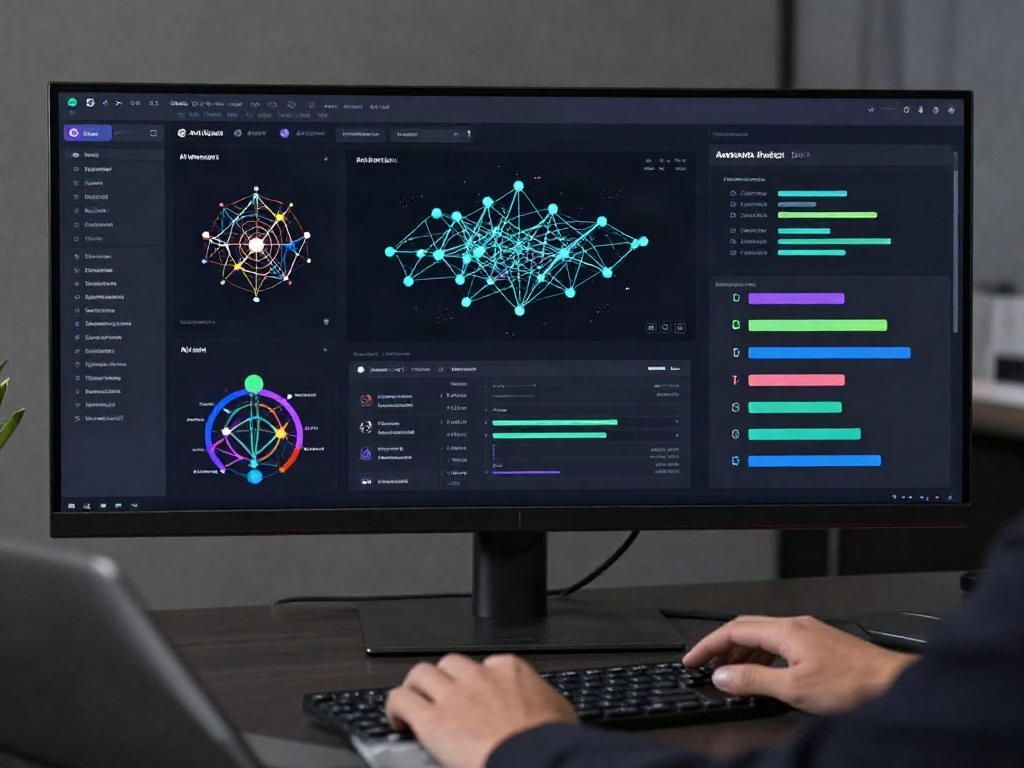
A robot's video and sensor records can support maintenance, safety reviews, waste planning, and site closeout. That makes data handling part of the product. Operators need timestamps, location information, sensor readings, and files that people can review after the robot leaves.
The buyer may ask who owns the data, how long it stays available, and how the system records changes. A robot company that cannot answer those questions will have trouble in a regulated facility, even if its hardware works well.
I’d start with inspection data before building a general-purpose nuclear robot. The task is easier to define, and the customer can judge the result against a report, image set, or sensor record.
A practical buying checklist
Before funding a nuclear robotics project, check these points:
- Name the room or asset: identify the pipe, tank, tunnel, hot cell, or waste area the robot must reach.
- Set the exposure limit: record the radiation, heat, water, dust, and cleaning conditions the machine must handle.
- Choose remote control: decide how operators will see, drive, stop, and recover the robot when its route is blocked.
- Define the output: specify the video, map, dose reading, inspection report, or handled object the customer will receive.
- Plan for failure: list spare cameras, batteries, cables, motors, and a method for recovery if the robot stops.
- Check site rules: confirm access, training, data storage, waste handling, and safety approval before a trial.
The strongest business cases will begin with one facility task and grow only after the robot works under site conditions. The open question is how many nuclear operators will pay for repeated robot services instead of buying and maintaining the machines themselves.