
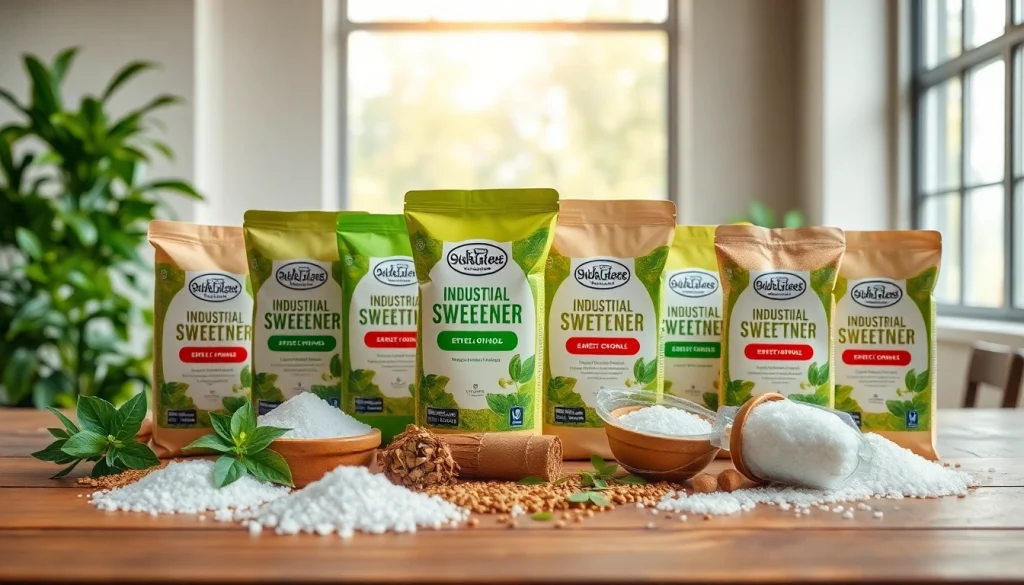
What Is an Industrial Sweetener?
Definition and Overview
An industrial sweetener is any sugar or sweet-tasting substance that is used in manufacturing and food processing to provide sweetness without the calorie content of traditional sugar or with reduced calorie content. These sweeteners can be used alone or in combination with sugars to create a desired flavor profile, improve texture, and achieve cost efficacy in food products. Industrial sweeteners derive from various sources, including plants, artificial processes, and fermentation methods, catering to diverse dietary needs and preferences.
Common Types of Industrial Sweeteners
Industrial sweeteners come in several forms, broadly categorized into natural and synthetic sweeteners:
- Naturally Derived Sweeteners: These include substances like stevia, agave nectar, and coconut sugar. They are derived from plants and often contain fewer calories compared to traditional sugars.
- Synthetic Sweeteners: Includes substances such as aspartame, sucralose, and saccharin, which are manufactured through chemical processes. These sweeteners are often significantly sweeter than sugar, allowing for smaller quantities to achieve desired sweetness.
- Sugar Alcohols: Erythritol and xylitol fall into this category. They are known for providing sweetness with a lower caloric content and are commonly used in sugar-free products.
Application in Various Industries
Industrial sweeteners play a crucial role across several sectors, including:
- Food and Beverage: Used in everything from baked goods to beverages, offering flavor enhancement and aiding in cost reduction.
- Pharmaceuticals: Employed in medications to improve taste, making them more palatable for patients, especially children.
- Cosmetics: Found in various beauty products where they serve aesthetic and flavor purposes.
Benefits of Using Industrial Sweeteners
Health Considerations
The ongoing health consciousness among consumers has driven the demand for industrial sweeteners, primarily due to their reduced calorie content compared to traditional sugars. Many industrial sweeteners do not contribute to blood sugar spikes, making them suitable for diabetic individuals or those managing their weight. Furthermore, some sweeteners, like stevia, potentially have beneficial properties, such as anti-inflammatory effects.
Culinary Advantages
Using industrial sweeteners allows food manufacturers to maintain flavor and texture while reducing the overall sugar content in products. Many industrial sweeteners can enhance product longevity, improve texture, and even reduce spoilage. Their versatility means they can be formatted into various products, from liquid to powdered forms, catering to different culinary needs.
Cost-Effectiveness in Production
Sourcing industrial sweeteners can lead to favorable cost reductions for manufacturers. On a functional basis, these sweeteners often require smaller quantities due to their heightened sweetness levels, leading to less ingredient bulk and lower shipping costs. Additionally, the ability to produce low-calorie or sugar-free options can broaden market reach and attract health-conscious consumers.
Key Differences Among Sweetener Types
Naturally Derived vs. Artificial
The distinction between naturally derived and artificial sweeteners primarily lies in their origin and processing. Naturally derived sweeteners come from plants and involve minimal processing, while artificial sweeteners are synthesized through chemical processes. The debate surrounding health impacts also continues, with many consumers favoring natural products over their synthetic counterparts.
Caloric Content and Sweetness Levels
Caloric content varies significantly between sweetener types. Natural sweeteners, while generally lower in calories, can still offer notable caloric contributions. In contrast, artificial sweeteners often boast nearly zero calories yet can be many times sweeter than sugar, allowing for minimized usage. Understanding these differences is crucial for manufacturers aiming for caloric reduction in their product offerings.
Usage in Food Production
The compatibility of sweeteners in various food formulations is essential. Natural sweeteners may contribute flavors or textures desirable in certain products, while artificial sweeteners help achieve sweetness without undesirable calories. Knowing when and how to use each type is necessary for food scientists for product development.
Trends in Industrial Sweetener Usage
Consumer Preferences Shifting to Healthier Options
As health concerns rise and the awareness of sugar’s adverse health effects becomes more prominent, consumer preferences are shifting towards lower-calorie, no-calorie, and healthier sweetening alternatives. Companies are revolutionizing product lines to comply with these trends, leading to a surge in the use of industrial sweeteners in reformulations.
Sustainability in Sweetener Production
With the rise of environmentally conscious consumers, sustainable sourcing and production methods have become paramount. Companies are exploring eco-friendly ways of producing sweeteners, from soil conservation practices to the use of renewable energy sources in manufacturing.
Innovations in Sweetener Technology
Innovative tech and research into molecular structures of sweeteners have paved the way for the development of new sweetening agents with enhanced properties. Innovations such as flavor enhancement strategies and better extraction methods have contributed to the efficiency of how sweeteners are produced.
FAQs About Industrial Sweetener
1. Are industrial sweeteners safe for consumption?
Most industrial sweeteners are considered safe for consumption when used within established guidelines. Regulatory agencies assess their safety before widespread market introduction.
2. What distinguishes natural from artificial industrial sweeteners?
Natural sweeteners are derived from plants with minimal processing, whereas artificial sweeteners are synthesized chemically, which can raise health concerns for some consumers.
3. How are industrial sweeteners produced?
Industrial sweeteners are produced through various methods, including extraction from plants, chemical synthesis, or fermentation processes, depending on their type.
4. Can industrial sweeteners help with weight management?
Yes, industrial sweeteners can aid in weight management by providing sweetness with fewer or no calories, which can help reduce overall sugar and calorie intake.
5. What are examples of commonly used industrial sweeteners?
Commonly used industrial sweeteners include aspartame, sucralose, stevia, and erythritol, each with unique characteristics that cater to diverse consumer preferences.